TL;DR
“Where is my order?” (WISMO) queries can account for up to 40–50% of all ecommerce support tickets. Each one costs between $5 and $22 to resolve manually. The fix isn’t faster shipping. It’s better communication. Proactive messaging through SMS, RCS, and WhatsApp can prevent the majority of WISMO inquiries before they ever reach your support team — saving time, reducing costs, and turning a moment of anxiety into a moment of trust.
The Question That Won’t Stop Ringing
You know this one. A customer places an order. Excitement peaks. Then silence. No update. No tracking. No indication that anything is happening at all. So they reach out. They email. They call. They message on social media. The question is always the same: “Where is my order?” In the industry, this question has a name. WISMO. And it is quietly becoming the most expensive line item in your customer support budget.
WISMO inquiries now represent 30 to 40% of all ecommerce support tickets during normal periods. During peak seasons like Black Friday or the holiday rush, that number can climb to 50% or more. And every single one of those tickets costs money. CX analysts like Qualtrics estimate that each support call costs between $3 and $7, with more complex multi-touch resolutions reaching $22 or higher.
For a mid-market retailer processing 5,000 orders per month with a moderate WISMO rate, that’s easily $10,000 to $40,000 every month. All spent answering a question that should never have been asked.
We always say that time is mission critical. And right now, your team is spending it on the wrong things.
The Real Cost of WISMO Goes Beyond the Ticket
The direct cost per ticket is painful enough. But WISMO’s damage runs much deeper than operational spend.
Every WISMO ticket that lands in your queue displaces a higher-value interaction. Your agents could be resolving complex complaints, handling returns, upselling, or saving at-risk customers. Instead, they’re copy-pasting tracking IDs. That’s skilled labour burned on a question a simple text message could have prevented.
Then there’s the loyalty erosion. A 2024 consumer survey cited by Shopify found that 44% of US shoppers stopped buying from a company after just one poor customer service experience. WISMO is almost always a poor experience. The customer is already anxious. They’re already frustrated. By the time they reach out, trust is already damaged.
And it gets worse during the moments that matter most. When delivery volumes spike (like during holiday seasons, flash sales, product launches) WISMO doesn’t just increase proportionally. It compounds. Support teams drown in repetitive tickets. Response times balloon. Agents burn out. And every unanswered query becomes a potential churn event.
The long-term consequences are well documented. Research from Bain & Company shows that increasing customer retention by just 5% can boost profits by 25–95%. Every WISMO failure that pushes a customer away is a direct hit to that retention — and to your bottom line.
| WISMO Impact | The Numbers |
| Share of total support volume | 30–40% (up to 50% at peak) |
| Cost per manual resolution | $3 – $22+ |
| Consumers who track orders | 96% when tracking is available |
| Consumers checking tracking daily | 43% |
| Customer churn after bad CX | 44% stop purchasing |
Sources: Shopify, Qualtrics, Capital One Shopping.
Why WISMO Happens (And How Are You Causing It?)
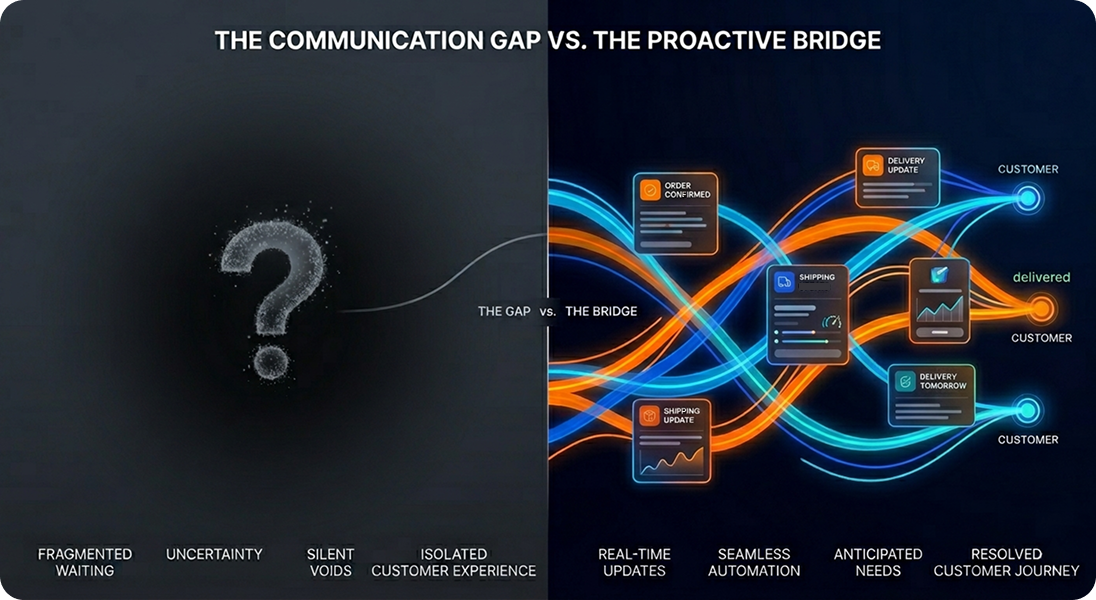
Let’s be direct. WISMO is not a customer problem. It’s an information problem. Customers don’t contact you because they’re impatient. They contact you because you left them in the dark.
And the root causes are almost always the same:
- No proactive updates. The order was placed. A confirmation email went out. Then nothing. No shipping notification. No estimated delivery window. No heads-up when things change.
- Vague or broken tracking. The tracking link exists but shows “in transit” for five straight days. Or it points to a carrier page that means nothing to a non-logistics professional.
- No channel diversity. Updates go to email only. But your customer checks their inbox once a day and their phone every few minutes. The message exists. The customer never sees it.
- No fallback for exceptions. When a shipment is delayed by weather, a carrier issue, or a warehouse backlog, nothing happens. The customer discovers the delay on their own. By then, they’re already angry.
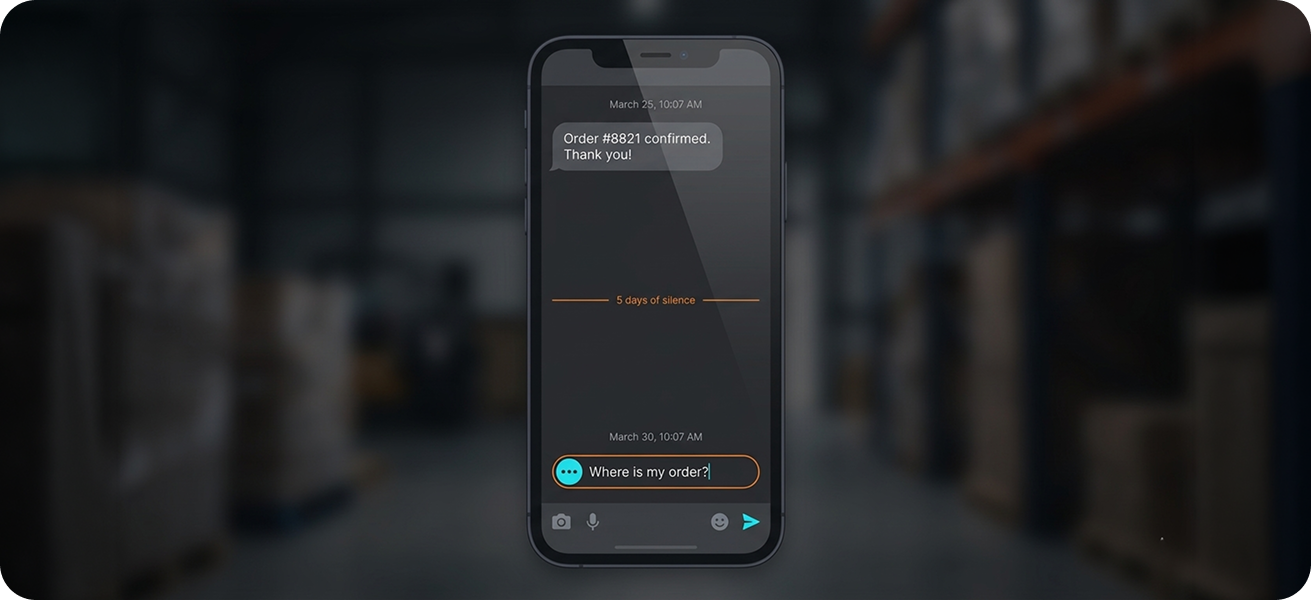
Here’s the thing. Research from Capital One Shopping shows that 96% of consumers track their orders when tracking is available, and 43% check every single day until delivery. Shopify reports that 69% of consumers feel real-time order tracking is a top factor when shopping online. Your customers are actively looking for information. If you’re not providing it proactively, they have no choice but to ask.
The Proactive Messaging Fix
The single most effective way to reduce WISMO is deceptively simple. Don’t wait for the customer to ask. Tell them first.
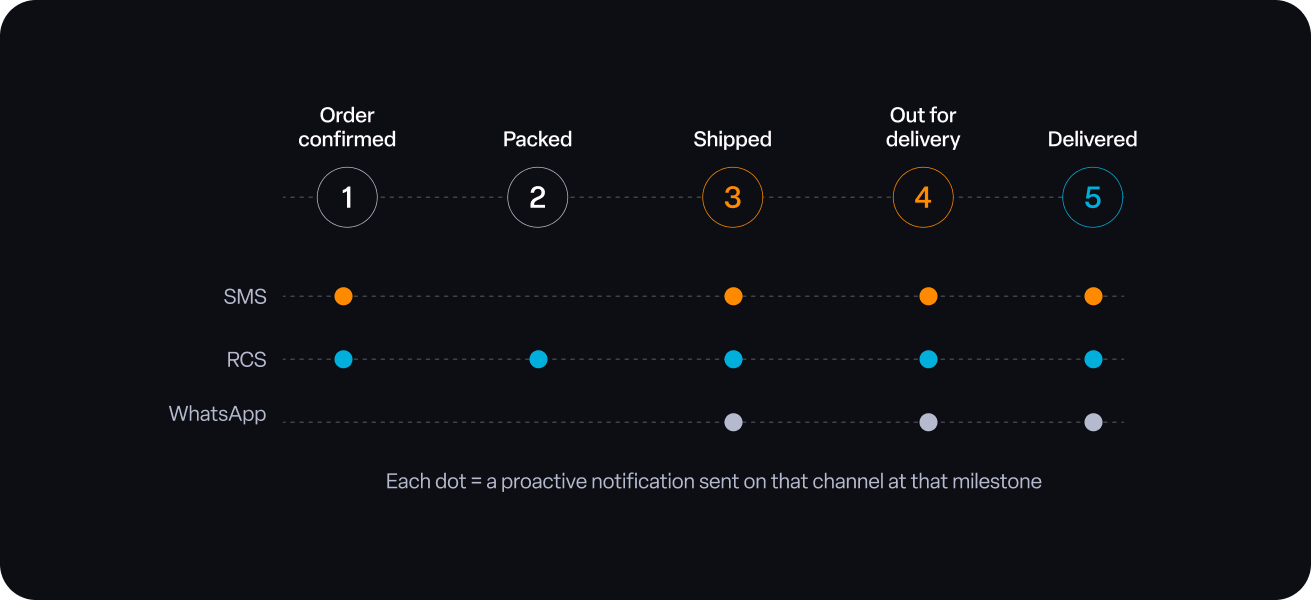
Proactive communication at key delivery milestones (e.g. order confirmed, packed, shipped, out for delivery, delivered) can prevent the majority of WISMO inquiries before they happen.
LateShipment research shows that brands using proactive delivery notifications typically reduce WISMO ticket volume by 60–70% within 60 days. And here’s what makes it even more compelling: customers are significantly more forgiving of delays when they’re notified proactively. Because the delay was never really the problem. It was the silence.
But here’s where most companies stumble. They send a single email confirmation and consider the job done. That’s not proactive communication. That’s a receipt.
True proactive messaging means reaching customers on the channels they actually use, at the moments that actually matter, with information that actually helps. That’s where your channel strategy becomes critical.
SMS: The Reliability Backbone
SMS remains the most universally accessible messaging channel on the planet. No app downloads. No internet connection required. A 98% open rate and the majority of texts read within minutes of receipt. For time-sensitive delivery updates, nothing else comes close to guaranteed visibility.
And consumers want it. Industry data consistently shows that roughly two-thirds of consumers specifically prefer receiving delivery notifications via SMS. This isn’t a marketing channel anymore. It’s an operational channel, and your customers are asking you to use it.
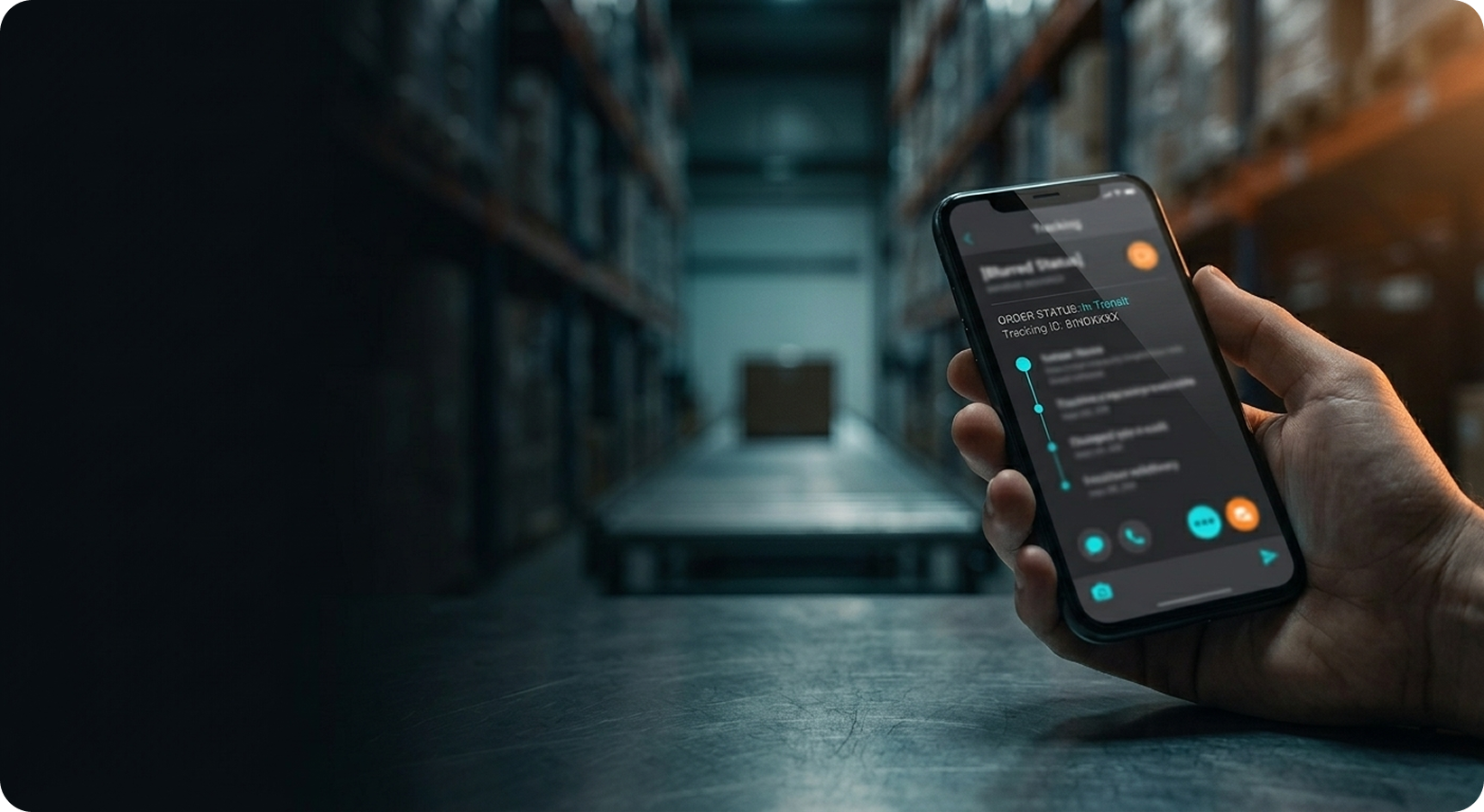
An automated SMS flow triggered by shipping milestones (dispatched, in transit, out for delivery, delivered) gives your customer certainty. Certainty eliminates WISMO. Every text you send is a support ticket you don’t have to answer.
RCS: SMS, But Smarter
Rich Communication Services is the next evolution of text messaging. It delivers directly to the native messaging app on both Android and iOS devices. No separate app needed. What it does better than SMS, though, are branded sender profiles, rich media, interactive buttons, carousels, and verified identity badges.
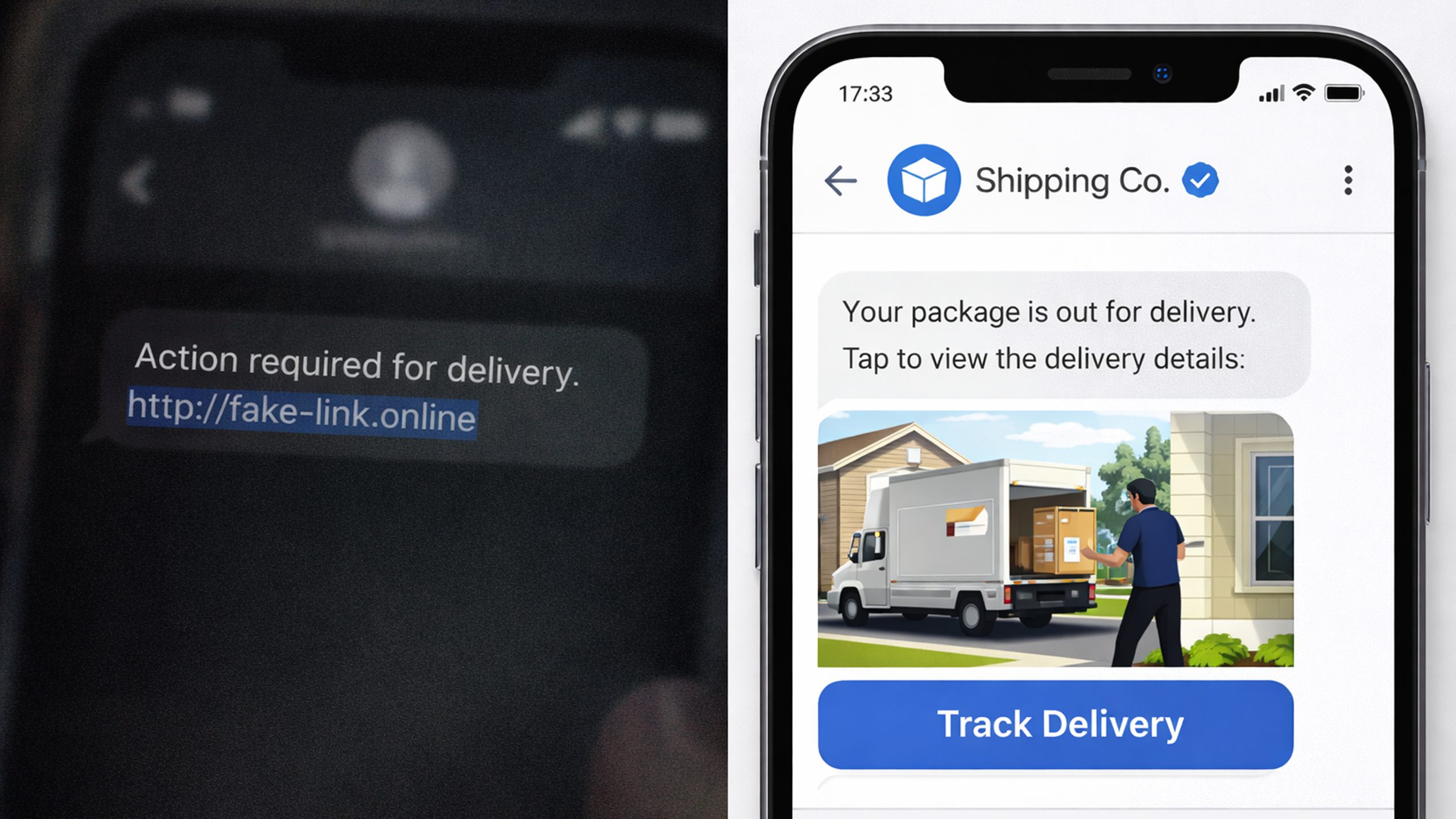
This changes everything for order tracking. Instead of a plain-text message that says “your order has shipped,” an RCS message can display a branded notification with your company logo, a live tracking button, an embedded delivery map, and a one-tap option to reschedule delivery. According to the GSMA, RCS is projected to reach over 2 billion active users in 2026. Industry data consistently shows read rates above 70% and click-through rates up to 7x higher than traditional SMS.
The verified sender feature is especially important for post-purchase communication. Google’s RCS documentation confirms that consumers are 35 times more likely to read an RCS message than an email. In an era where customers are conditioned to ignore messages from unknown senders, that trust signal is the difference between engagement and a WISMO ticket.
RCS also supports two-way communication natively. That means customers can reply to reschedule a delivery, confirm they’re home, update an address, or report an issue — all within the same thread. No phone call. No email chain. No ticket. No problems.
WhatsApp: The Conversational Powerhouse
With nearly 3 billion monthly active users worldwide, WhatsApp is the default messaging channel in many of the markets where ecommerce is growing fastest. Its Business Platform allows enterprises to send templated notifications (shipping updates, delivery alerts, exception handling) and then engage in real-time two-way conversations within a 24-hour service window at no extra message cost.
For WISMO specifically, WhatsApp offers capabilities that email and SMS simply cannot match. Rich media support means you can send photo proof of delivery. Location sharing allows live tracking updates. Interactive buttons let customers confirm receipt, report problems, or reschedule with a single tap.
And when a customer does need to reach out, a WhatsApp chatbot can handle routine order- status queries instantly and automatically. Companies consistently report that bots resolve the majority of routine inquiries without human intervention, freeing agents to focus on complex, high-value issues that actually require a human touch.
The Intelligent Fallback: Orchestrating All Three
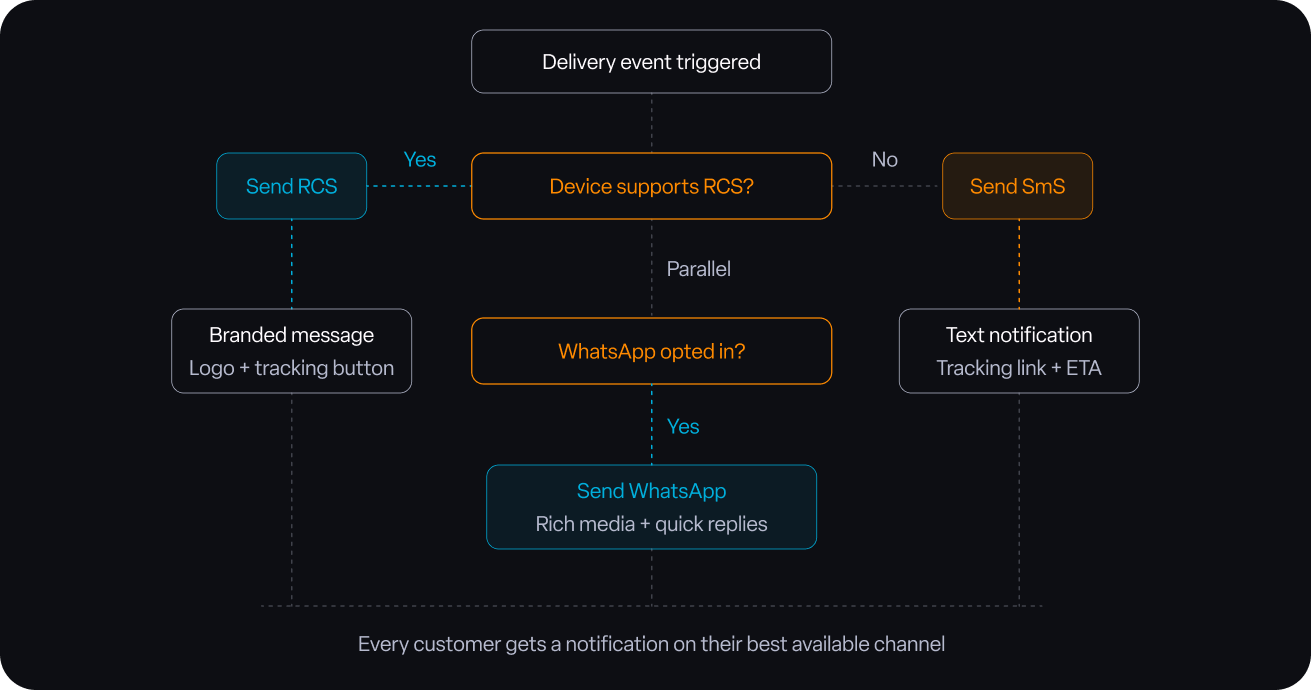
No single channel is the answer. The real power lies in orchestration.
An intelligent messaging system sends an RCS notification first. If the device doesn’t support RCS, it falls back to SMS. If the customer has opted into WhatsApp Business messages, a parallel notification goes there too. The result: total reachability, regardless of device, network, or customer preference.
This isn’t about sending more messages. It’s about sending the right message, on the right channel, at the right time. And when exceptions happen like a delay, a failed delivery attempt, a routing change, etc. then the system triggers an immediate proactive alert instead of waiting for the customer to discover the problem on their own.
That’s how you turn WISMO from a cost center into a competitive advantage.
Automation Beyond Tracking Updates
Proactive notifications are the first line of defense. But the smartest companies go further by automating the response layer too.
Even with perfect proactive communication, some customers will still reach out. That’s fine. What matters is how quickly and efficiently you resolve the inquiry. Gartner predicts that by 2029, agentic AI will autonomously resolve 80% of common customer service issues without human intervention, driving a 30% reduction in operational costs. WISMO, as the most repetitive and data-driven query type, sits right at the front of that shift.
But the automation opportunity extends well beyond order status checks:
- Delivery rescheduling: Let customers change delivery windows via a WhatsApp quick reply or an RCS interactive button.
- Address corrections: Catch errors before they cause a failed delivery by prompting customers to confirm their address via SMS after dispatch.
- Exception management: When a carrier flags a delay, an automated message goes out immediately with a revised ETA and a one-tap option to contact support if needed.
- Proof of delivery: Send a photo confirmation via WhatsApp the moment the package is delivered, eliminating “it says delivered but I don’t have it” disputes.
- Feedback collection: Trigger a quick satisfaction survey via RCS 24 hours after delivery, turning a transactional moment into a retention opportunity.
Each of these automations removes friction, saves time, and prevents a ticket from being created. The compound effect is significant.
The ROI Math: What This Actually Saves You
Assume you process 10,000 orders per month. With a 25% WISMO rate (conservative for most mid-market retailers), that’s 2,500 support tickets monthly. At an average resolution cost of $10 per ticket, you’re spending $25,000 per month ($300,000 per year) answering the same question.
Brands that implement proactive multi-channel messaging consistently report significant drops in WISMO volume. LateShipment’s data shows 60–70% reductions within 60 days, with repeat purchase rates improving by 6–12%. At the conservative end, a 50% reduction on a $300,000 annual WISMO spend saves $150,000 per year.
That’s before you factor in the secondary benefits: higher customer satisfaction scores, improved repeat purchase rates, lower agent burnout and turnover, and more time for your support team to focus on revenue-generating interactions instead of status checks. Forrester’s 2024 CX Index found that customer-obsessed organisations achieve 51% better retention and 49% faster profit growth than their peers. Every WISMO ticket you prevent moves you closer to that benchmark.
The messaging costs themselves are a fraction of the savings. A well-orchestrated SMS + RCS + WhatsApp notification flow costs pennies per order. The return is measured in dollars.
Start Here: A Practical Implementation Path
You don’t need to rebuild your entire tech stack to start reducing WISMO. Here’s a pragmatic approach:
- Map your WISMO rate. Before you automate anything, measure the problem. Tag WISMO tickets in your support platform. Calculate the percentage of total volume and the cost per ticket. This becomes your baseline.
- Identify the silence gaps. Walk through your current post-purchase flow from the customer’s perspective. Where does communication go quiet? That’s where WISMO is born.
- Start with SMS milestone notifications. Shipped, out for delivery, delivered. Three messages. Massive impact. SMS is the fastest to implement and delivers the broadest reach.
- Layer in RCS and WhatsApp. Once the basic flow is live, enrich it. Add branded RCS notifications with tracking buttons. Enable WhatsApp for two-way exception handling. Build a chatbot for automated status inquiries.
- Automate exception alerts. This is the highest-ROI move. When a shipment is delayed, don’t wait. Push an immediate notification with a revised ETA. Customers forgive delays. They don’t forgive silence.
- Measure and iterate. Track WISMO rate weekly. Watch ticket volume. Monitor CSAT. Every improvement compounds.
Conclusion: Stop Paying for Silence
WISMO is not a customer service problem. It’s a communication design problem. And the solution has been available for years — it just requires the right channels, the right triggers, and the right mindset.
Your customers are not unreasonable. They don’t want to call you. They don’t want to email you. They want to know what’s happening with their order. If you tell them before they have to ask, the question disappears.
Proactive, automated messaging across SMS, RCS, and WhatsApp doesn’t just reduce your support costs. It transforms the post-purchase experience from a liability into a loyalty engine. Every notification you send is a signal that you care about your customer’s time. And in a market where 44% of consumers will leave after one bad experience, that signal matters more than ever.
The most expensive question in customer support has a surprisingly simple answer. Why are you still making them ask?
FAQ
What does WISMO stand for?
WISMO stands for “Where Is My Order?” — the most common customer inquiry in ecommerce. It covers any question about order status, shipping location, or delivery timing.
How much does a WISMO ticket actually cost?
Industry benchmarks place the cost between $3 and $22+ per interaction, depending on the support channel and complexity. For high-volume retailers, annual WISMO costs can easily reach six figures.
Can automated messaging really reduce WISMO by 60–70%?
Yes. Brands using proactive shipment notifications tied to carrier data consistently report reductions of 60–70% in WISMO ticket volume within 60 days. The key is sending updates at the right milestones — especially when exceptions occur.
Which messaging channel works best for order tracking?
No single channel is best. SMS provides universal reach and near-instant visibility. RCS adds branding, interactivity, and verified identity. WhatsApp enables rich two-way conversations and media sharing. The most effective approach combines all three with intelligent fallback routing.
How quickly can I implement proactive order notifications?
Basic SMS milestone notifications can go live within days if your order management system supports webhook triggers. RCS and WhatsApp flows require slightly more setup for template approval and channel integration, but a full multi-channel notification system can typically be operational within weeks.