TL;DR
Modern logistics requires flawless communication to survive razor-thin margins. Traditional SMS can create expensive blind spots and frustrates drivers. Upgrading to WhatsApp enables two-way chat, instant photo sharing, and automated workflows. This stops failed deliveries and actively retains your workforce.
Intro
Logistics is changing incredibly fast right now. Profit margins are thinner than ever before. Customer demands just keep growing every day. You feel this intense pressure daily. Your primary job is keeping goods moving. But moving physical goods requires moving information. Your dispatch communication must be absolutely flawless. Sadly, most enterprise dispatch systems are broken. They rely heavily on outdated technology. They cause massive operational delays. They cost your company serious money.
Time is your most critical asset. You simply cannot afford to waste it. Traditional setups use noisy, messy radios. They rely on siloed SMS networks. This creates massive operational blind spots. You lose millions in wasted man-hours. Failed deliveries destroy your hard-earned profits. It is definitely time for a change. You need a truly modern system. You need expert, human-centric communication tools. This comprehensive guide shows you exactly how. We will explore the shift to WhatsApp. We will see why SMS falls short. We will look at the hard data.
Macro Pressures Are Squeezing Your Margins
Let us look at the big picture. The global economy is highly volatile. Logistics costs are soaring everywhere. U.S. logistics costs reached $2.58 trillion. That is a truly massive number. It equals 8.8% of the GDP. This is a permanent structural shift. It is not a temporary glitch. Inflation remains incredibly stubborn today. Fuel markets swing wildly without warning. Your driving workforce is aging rapidly.
Experts call this navigating through the fog. Deep uncertainty is the new normal. Operations managers are caught in the middle. You must cut your operating costs. You must improve overall fleet efficiency. You must keep customer service levels high.
| Macro Challenge | Statistical Impact | Implication for Operations |
| Total Logistics Costs | $2.58 trillion | High pressure to lower OPEX. |
| Driver Turnover Rate | 94% annually | Massive, continuous recruiting costs. |
| Driver Replacement Cost | Up to $20,000 | Profit margins erode instantly. |
| Last-Mile Cost Ratio | 53% of total costs | Errors amplify financial damage greatly. |
| Labor Cost Inflation | 9.5% increase | Absolute need for digital workflows. |
These numbers are alarming. And geopolitics aren’t helping, either. Tariffs change almost overnight sometimes. Trade flows shift without warning. And when that happens, you have to adapt your routes. Instantly. Static dispatch plans fail. You need dynamic, predictive visibility. You need two-way fleet communication. This is your best path to profit.
The Cost of Communication Blind Spots
Bad tools cost you real money. Fragmented dispatch is an absolute nightmare. Radios and phone calls cause chaos. Dispatchers can’t see the big picture.
They react instead of planning proactively. They juggle way too many apps. They check a routing map. They open an SMS tool. They check a separate chat window. This constant toggling slows everything down. Drivers miss urgent updates. Traffic jams trap your trucks. Route changes happen too late for anything to really change.
And these errors are expensive. Poor communication costs companies $420,000 yearly. Logistics disruptions steal weeks of time. Half of companies lose a month annually. Supply chain breakdowns destroy your revenue. You need unified orchestration immediately. Reclaim your team’s valuable time.
The Epidemic of Failed Deliveries
Failed deliveries are your worst enemy. They hurt your e-commerce and retail partners, badly. Missing a first attempt triggers a crisis. It ruins your key performance metrics. Let’s look at the math. Between 5 and 8% of deliveries fail. This happens on the very first try. Single digits might sound small. But at an enterprise scale, they’re disastrous.
It’s a chain reaction. One failed delivery costs exactly $17.78. This covers wasted fuel. It covers lost driver labor hours. It accounts for truck depreciation. But the pain goes much deeper. Your optimized route? It’s broken, now. Drivers have to change their plans. Overall fleet efficiency drops. The package goes back to the warehouse. It must be processed all over again. It gets loaded for another attempt. You double your work for zero pay.
Destroying Customer Trust
Redeliveries are financially toxic. Your operating margins are just too thin. Beyond direct costs, you destroy brand equity. Modern consumers demand absolute perfection. They expect rapid, transparent service. And in the competitive marketplace, customers churn. They will not buy from you again. One bad delivery can irreparably ruin the relationship.
At the same time, delivery failures spike support tickets. Support volume jumps by 210%. Your call centers get overwhelmed. And your administrative costs go through the roof.
The Root Causes of Failure
Why do these deliveries actually fail? The data points to communication gaps. Address errors cause almost half of all failures. Locked gates are another problem. And sometimes customers are simply not home.
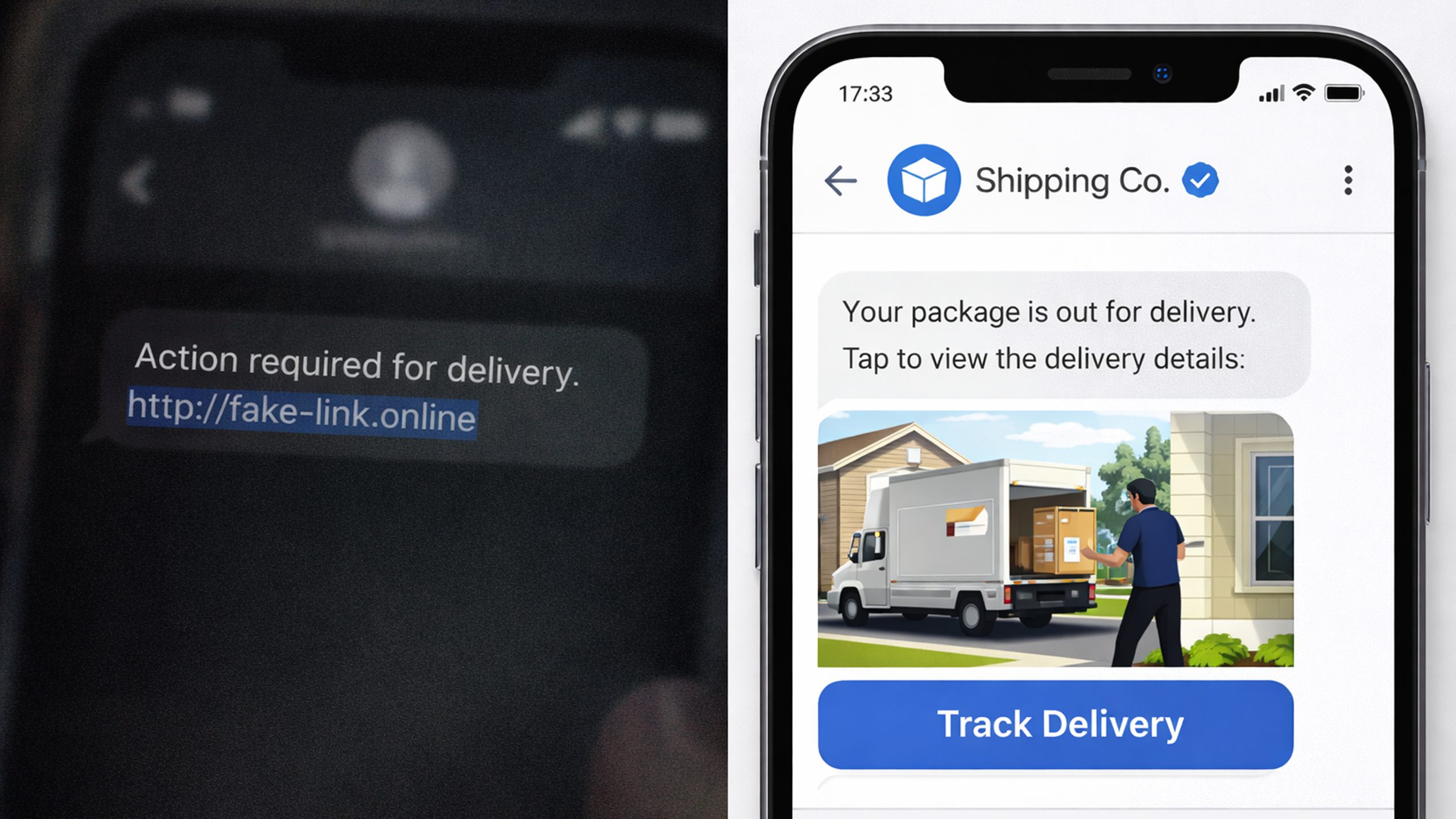
These are basic information failures. And they’re totally preventable. One-way alerts do not work well. Static emails? Mostly useless. Basic SMS notifications often fail to fully engage. They only tell the customer that something is happening, but they do not allow for fast feedback.
So, what happens when the customer is out? What if a gate is locked? Your driver gets stuck waiting. The delivery fails. What you need is immediate, proactive engagement. You need an interactive two-way channel. Ask for the gate code early. Get it before the truck arrives. Update the daily manifest instantly. This saves both money and time.
Why Legacy SMS Fails Modern Dispatch
SMS has been around for decades. It’s the old reliable backbone. Its main strength is total ubiquity. It reaches every mobile phone globally. No internet connection is required. No app downloads are needed. It boasts a 98% open rate. Most texts are read in three minutes.
SMS is great for simple alerts. Weather warnings work well on SMS. Simple authorization codes are fine, too. But modern logistics is highly complex. Driver dispatch is not simple anymore. SMS has its technical limits which restrict your operational speed.
The Friction of One-Way Workflows
Since dispatch is fluid and highly dynamic, bidirectional data flow is absolutely mandatory. Drivers must confirm loads constantly. They must report vehicle maintenance issues. They need to clarify delivery instructions. SMS was built mostly for broadcasting.
Two-way SMS is technically possible. But the interface leaves a bit to be demanded. It lacks required operational fluidity. It can’t handle rapid problem resolution. There are no threaded, contextual conversations. Tracking an issue is a nightmare. Dispatchers must toggle screens constantly. They scroll through messy text logs. They manually match texts to manifests. This results in bottlenecks. Valuable time is lost.
The Absence of Rich Media
This is the biggest SMS drawback. SMS just doesn’t handle rich media natively. Electronic Proof of Delivery is crucial. It secures billing and stops disputes. Drivers must take high-resolution photos. They must capture damaged freight images. They scan complex barcodes daily. They collect digital customer signatures.
This proves the delivery actually happened. It protects your company from fraud. SMS simply can’t send these files. MMS is also restricted. File sizes are way too small. And MMS message costs are too high.
When a driver takes a photo, they stop. They leave the dispatch app. They use slow web forms. They email the photo separately. Platform fragmentation slows everyone down. Vital data gets lost easily. This wastes incredibly valuable man-hours.
Lack of Real-Time Accountability
Uncertainty breeds massive operational inefficiency. Time is your ultimate currency. SMS lacks robust message tracking. There are no reliable read receipts. There are no typing indicators.
You send an urgent route change. You have no idea if it was seen. You must wait for their reply. You become entirely reactive. You waste time chasing acknowledgments. You make annoying follow-up phone calls. You worry about safety directives constantly. SMS only confirms network delivery. It proves absolutely nothing about human engagement.
The WhatsApp Business API Solution
Enterprise logistics leaders are migrating rapidly. They are moving to rich messaging. The WhatsApp Business Platform is perfect for complex driver dispatch. It handles internal operations flawlessly.
And WhatsApp has almost 3 billion active users. It is a robust enterprise infrastructure. It expertly supports human interactions. It handles complex technical automated workflows.
Five Ways WhatsApp Dominates In Logistics
Here is exactly why WhatsApp wins at logistics.
- Instant Proof of Delivery
WhatsApp handles high-fidelity media natively. Send high-res images instantly. Send videos and heavy PDFs. Share interactive location pins seamlessly. This transforms your delivery proofs. The driver drops the package. They snap a photo in the chat. It acts as instant, geo-verified proof. It protects against false claims immediately. It triggers automatic billing processes. No manual entry is needed. You can push documents to drivers. Send safety manuals directly. Eliminate physical paper waste completely. Accelerate your terminal departures.
- Live Location Sharing
Route optimization lowers your costs. It cuts fuel burn significantly. It ensures strict on-time performance. WhatsApp shares secure live locations. Dispatchers watch streams natively in chat. No need to call the driver for ETAs when you can watch the interactive map instead. Traffic incidents happen constantly. Weather causes sudden massive delays. Push new routes directly in chat. Keep the trucks moving forward always. Minimize fleet idle time completely.
- Guaranteed Accountability
Accountability drives true operational efficiency. WhatsApp shows message statuses clearly. You see Sent, Delivered, and Read. This changes everything for dispatchers. You know exactly when directives are seen. Unread messages trigger automated alerts. The system escalates the issue fast. It can trigger an automatic call. Critical safety information never gets lost.
- Agentic Automation Workflows
Digitizing manual labor is not enough. You need to automate it. WhatsApp supports highly interactive buttons. Use list messages and catalogs natively. Bind AI chatbots to the platform. Automate the majority of your routine chats.
Broadcast new loads to drivers easily. Drivers tap an “Accept” button. The system updates the TMS instantly. The vehicle is assigned automatically. The warehouse is notified immediately. No human dispatcher is required. Dispatchers focus on high-value exceptions instead.
- Enhanced Enterprise Security
You handle sensitive data constantly. Route data is highly proprietary. And customer info must be protected. Thankfully, WhatsApp uses end-to-end encryption. Bad actors cannot intercept your manifests. Digital signatures remain totally secure. Send passwords securely to drivers. Verify terminal gate access safely.
Calculating True Return on Investment
Upgrading your tech must save money. You must analyze the cost-to-value ratio. Be pragmatic but remain optimistic. WhatsApp pricing is different now. In 2025, it shifted to per-message billing. It depends on the message category. It depends on the country code.
But customer service interactions are special. A user messaging you opens a window. It is a 24-hour service window. Free-form messages are free during this. Utility templates are free too. You can resolve complex problems cheaply. Per-message fees do not spiral wildly.
Deflecting Costly Support Calls
Chatbots handle routine driver questions efficiently. Drivers ask for gate codes constantly. They ask about updated manifests. Bots answer these questions instantly. This drops inbound radio calls heavily. Manual dispatcher interventions vanish quickly.
Bots handle 80 percent of routine queries. One company saw calls drop 50%. This lowers process costs massively. It saves countless hours every single week.
Eradicating Delivery Penalties
Prevent delivery failures before they happen. Push interactive messages to customers. Let them reschedule with one tap. Let them confirm they are home. This avoids the $17.78 loss entirely.
Major retail brands see huge improvements. Failed deliveries drop by 40 percent. This is pure profit saved instantly.
Global Cost Efficiency
Cross-border SMS is very expensive. Carrier tariffs change constantly. International roaming fees hurt margins. WhatsApp uses the internet instead. Wi-Fi or cellular data works perfectly.
This stabilizes your communication costs. Geographic borders do not matter anymore. Global visibility becomes highly predictable. It is significantly more cost-effective.
The Human Element: Saving Drivers
Don’t forget your drivers. Logistics requires hard physical labor. You cannot automate driving just yet. Driver turnover is a 94% crisis. Replacing one driver costs $20,000. Retention is your absolute top priority.
Drivers hate administrative friction. Idle time directly impacts their paychecks. Bad dispatch systems can cause severe technostress. And waiting on hold is maddening. Clunky apps ruin their daily routines. Poor communication drives them away.
Trust breaks down rapidly. Job burnout happens fast. Driver safety gets compromised. They resign in sheer frustration.
Expertly Human Technology
WhatsApp fixes this cultural problem. It feels expertly human to use. It replaces rigid top-down orders entirely. It uses a familiar conversational interface. Drivers use it every single day.
There’s no steep learning curve. The tech works for the driver. Dispatchers can actually listen now. They offer proactive support instead. Telematics track strict hours of service. An automated WhatsApp message warns them. It suggests a secure rest stop.
This shows you actually care. It proves you value their safety. Fleets using this see lower turnover. Turnover drops by 20% easily. Clear instructions reduce missed deliveries. WhatsApp is a powerful retention tool.
Constructing the Intelligent Ecosystem
You must integrate everything tightly. Do not just swap text gateways. Connect your CRM system seamlessly. Hook up your TMS immediately. Link your vehicle telematics too.
The Single Pane of Glass
Unify your channels into one workflow. WhatsApp handles the two-way chat. Your backend system aggregates the data. The dispatcher sees one clean screen.
A driver sends a photo. AI extracts the image automatically. It attaches to the order manifest. It updates the billing software instantly. It texts the customer delivery proof. No manual data entry ever happens. Information flows incredibly fast.
Intelligent Fallback Mechanisms
Internet connectivity is not perfect everywhere. Rural areas have terrible signal. Mountains block cellular data. So you need a dependable backup plan. Use intelligent fallback routing.
A WhatsApp message fails to send. The system detects this instantly and reroutes via SMS within seconds. The driver gets the message regardless of data coverage, guaranteeing total reachability.
Predictive Analytics
Chat logs are an absolute goldmine. You get massive amounts of data. Analyze timestamps and driver response rates. Look at exception reports closely. AI finds hidden inefficiencies fast.
Some dispatchers take too long. Some loading docks are always jammed. Detect these bottlenecks and fix them. Stop reacting to daily crises. Instead, proactively design a better network using the hidden value in your data.
Strategic Implementation Guidelines
Deploy this technology carefully. Follow these strict guidelines for success.
- Prioritize High-Friction Workflows First: Do not automate everything at once. Find the biggest time wasters. Load acceptance is a great start. ETA updates are perfect targets. Move these to WhatsApp first. Use agentic bots for quick wins.
- Design for Human Automation: Do not use robotic language. Avoid corporate jargon entirely. Use clear, simple everyday words. Respect the driver’s limited time. Provide immediate and actionable solutions always. Act like a trusted advisor.
- Leverage Message Templates Well: Ensure strict regulatory compliance. Maintain consistent brand messaging always. Push dynamic variables from your TMS. Include gate codes and trailer numbers. Keep messages short and dense.
- Monitor Adoption Closely: Track the actual time saved. Watch dispatcher handling times drop. Measure the drop in radio calls. Count the reduction in failed deliveries. Iterate constantly based on KPIs. Align the system with business goals.
Conclusion
Supply chains will remain incredibly complex. Macro volatility is definitely here to stay. Consumer expectations will only rise higher, making flawless execution absolutely mandatory now.
WhatsApp is a massive operational leap. It brings real-time location tracking. It automates load assignments perfectly. And most importantly, it reclaims your team’s valuable time. Using WhatsApp helps you prevent the painful delivery penalty. It helps you support your human workforce better. This is not just IT software. This is a strategic business pivot. Save time, uncover hidden value, and turn your dispatch into a growth engine.
FAQ
Why is SMS no longer enough for modern dispatch? SMS was built for simple, one-way alerts. It cannot handle rich media like high-resolution photos. It completely lacks reliable read receipts. You cannot track if a driver actually saw your message. This creates massive operational blind spots daily.
How much does a failed delivery really cost? A single failed delivery costs exactly $17.78. This covers wasted diesel fuel and lost labor. It also ruins your carefully optimized route planning. You end up doubling your work for zero extra pay.
Can WhatsApp actually help reduce driver turnover? Yes, absolutely. Drivers hate waiting on hold for dispatch. WhatsApp offers a familiar, stress-free chat interface. Automated bots can answer routine questions instantly. This removes daily administrative frustration and builds real trust.
Is the WhatsApp Business API secure enough for enterprise data? WhatsApp uses strict end-to-end encryption by default. Your sensitive manifests and customer data stay completely safe. You can securely send terminal gate codes and passwords. Malicious third parties cannot intercept your data.
Will WhatsApp cost more than my current SMS setup? Not necessarily. WhatsApp charges per message, not sheer volume. However, customer service interactions open a 24-hour window. During this specific window, free-form messages are totally free. Automating routine chats will significantly lower your overall operating costs.